Most people don’t pay attention to their roof until the water begins dripping through the ceiling. By then a simple fix often won’t do.
The problem is roofs wear out slowly. They are out of sight and small issues can be overlooked easily unless you check the loft on a regular basis or inspect the roof from the outside. What begins as a small leak can quietly cause damage for months before it becomes apparent. In many cases a storm gets the blame when it only exposed a roof that was already reaching the end of its life.
If you can spot the warning signs early, you can save a lot of money. Catch the problems early enough and a repair might be all that is needed. Leave them for too long and you might end up paying for repair after repair when it would have been better to replace the roof from the beginning.
Here are the signs that usually point towards a full roof replacement rather than another repair.
1. Your roof is over 20 years old
Age isn’t the only factor to consider when you decide to get a new roof but it’s still one of the first things to check as it helps explain everything else.
Concrete roof tiles can last between 30 and 50 years. Clay tiles tend to last about 40 to 60 years while natural slate can last a lot longer if it’s been maintained properly. Felt roofs do not last as long and will need replacing after about 10 to 15 years, and lower quality felt can wear out even faster.
If you don’t know how old your roof is, you should check the paperwork from when you bought the house. You could also ask neighbours with similar properties or get a roofer to have a look. A roofer can usually tell the age from the type of tiles, the fixings and the general condition.
As roofs get older, it’s not just the tiles that wear down. The battens, underlay and fixings start to fail also and when this happens, problems tend to show up in several places at once. If this starts to happen and you just try to get repairs done, it won’t help you much as you would only be trying to fix the symptoms and not the real cause.
2. Tiles are cracked slipping or missing in several places
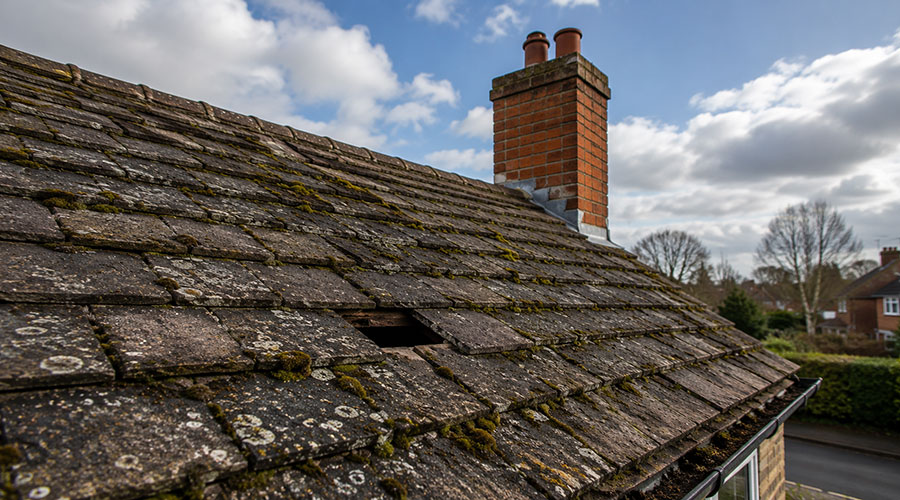
One broken tile, no problem as it’s a simple fix and most roofers can take care of it in a jiffy. But if you’ve got tiles falling into your garden after a windstorm or you notice missing and slipped tiles all over the roof then it’s a different story.
Tiles do not usually come loose for no reason. As per roof they are attached to timber battens using nails clips or hooks. If several tiles have slipped, it is usually due to the battens or fixings beneath having begun to rot or corrode. Replacing the tiles alone is not going to solve the problem because the same thing is likely to happen again.
Take a walk around your house after strong winds and look at your roof from different angles. Binoculars might help if you can’t see well. Missing one or two tiles may require only a repair. If they are spread out over the roof then it is usually a sign that the roof structure underneath is starting to fail.
3. You can see daylight through the roof from the loft
This is one of the easiest checks you can do yourself. Go into the attic on a bright day and turn out the lights. Let your eyes adjust for a minute, then look up at the roof.
If you can see daylight passing through there is a high chance water can get through the same gaps. A few small dots of light on an older roof are not always a problem. Generally, larger gaps or patches of daylight indicate the roof covering has deteriorated.
If you can see it from the loft, check the underlay. Older felt can get brittle with age. It can crack, sag or tear and once that happens it no longer provides the protection it was designed for.
4. The roofline is sagging
Go out of your house and look along the roof line and if possible, stand across the road so you can see the whole roof.
It needs to be straight all the way through. Dips, waves and sagging usually indicate something more than just broken tiles.
If there are dips in the roof, the rafters or decking may be weak. Common causes are long term water damage rot or the addition of extra weight from previous roofing work.
This is not to be overlooked. Once a roof begins to sag it can go downhill pretty quickly. In fact it can even become a safety issue in some cases so it’s worth having it inspected as soon as possible.
5. Damp patches mould or peeling paint indoors
Water doesn’t always appear where it gets in. It can go through the rafters, insulation and the joists and then show up somewhere else. So a stain on the ceiling is not always directly under the leak. The water could be coming into the roof a fair distance away.
A small repair after a heavy storm can take care of a damp patch but if the same patch keeps reappearing or you notice damp patches in a number of rooms, it usually means there’s a bigger problem with the roof.
Also watch out for musty smells upstairs or in the loft. Moist wood may not always show the damage right away, but it can still cause damage over time.
6. Your energy bills keep going up
Older roofs with broken insulation, worn underlay or gaps around the roof covering can let out heat in surprisingly large amounts.
If your heating bills have been climbing and nothing else has changed, your roof might be part of the problem. A new roof, with modern insulation typically keeps the home cosy and more energy efficient.
7. Moss algae or dark streaks cover most of the roof
Some moss on a roof is not unusual, especially on north-facing slopes where the surface stays damp longer but the real problem starts when moss or algae starts to grow over large areas. It traps moisture against the tiles which may speed up wear over time. Thick moss can also hide cracked or broken tiles making problems more difficult to spot.
Moss by itself does not mean you need a new roof but if it is growing along with some of the other warning signs on this page it may be a sign that replacing the roof is the better long term solution.
Repair or replace?
If there is one isolated problem in one area of the roof then a repair is often the correct decision.
If you’re experiencing a few of these signs at the same time or calling out a roofer every year for a different issue it’s usually worth considering a full replacement instead. It can be cheaper in the long run and you can have peace of mind that the whole roof has been repaired.
The easiest way to find out where you stand is to schedule a roof inspection. Most roofing companies will inspect your roof for free and tell you if you need a repair or if it’s time to replace it.
Wondering what a full roof replacement would actually cost? Check our roof replacement cost guide for a breakdown by roof type and size.
Need a Roof Replacement Quote?
Compare up to four trusted local roofing companies and receive free, no-obligation quotes in just a few minutes.
Get Free QuotesAbout the Author
The Roof Replacement Costs editorial team researches roof replacement costs, materials and industry guidance to create clear and reliable advice for UK homeowners. Our guides are reviewed regularly to help keep the information accurate and up to date.